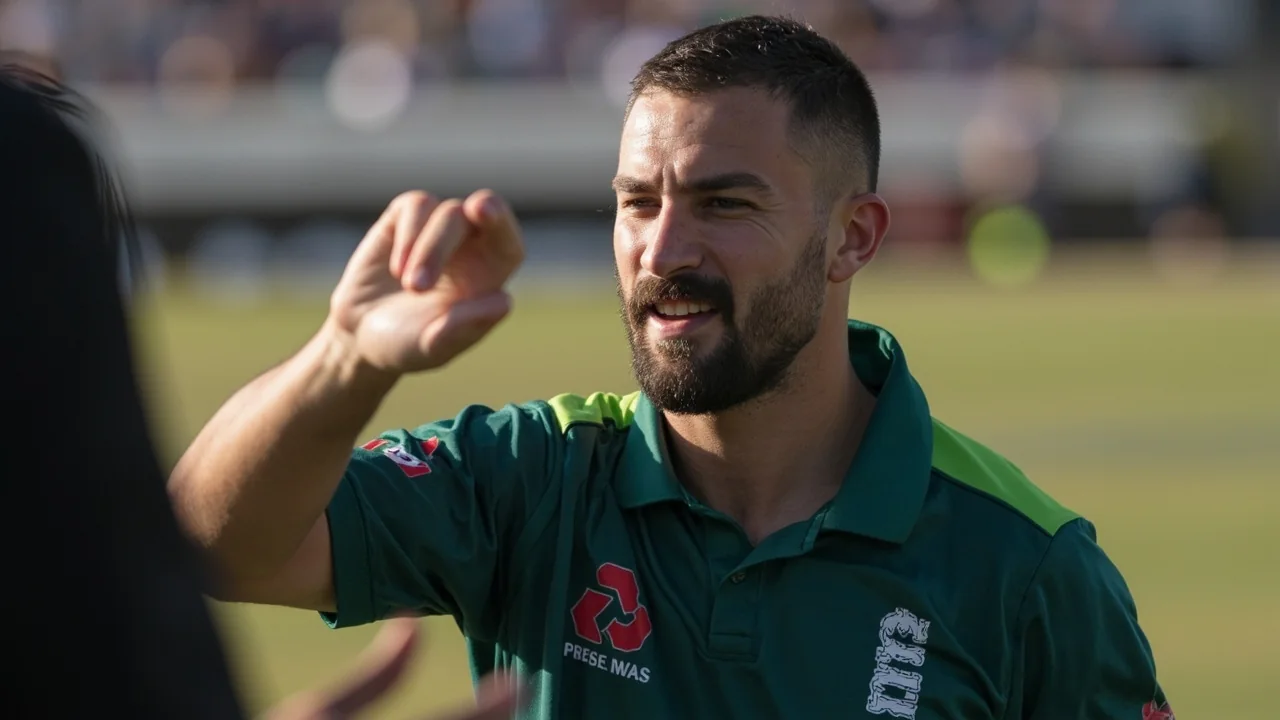
Hundred 2026 Match 26 Death-Overs Differential: Why the 30-Ball Death Window Hands the 2x to the All-Rounder, Not the Run-Chart Leader — Southern Brave vs Manchester Super Giants
The Hundred compresses a T20-equivalent death phase into 30 balls, not 36, and that compression changes who holds the captain armband at the 10:30 PM IST Dream11 lock. A death-overs reading of Match 26 at The Rose Bowl explains why the all-rounder ceiling beats the run-chart leader on this fixture, what the 58% chasing baseline at Southampton does to the death-set lineup, and which two cards the Fantasy Tips desk would fade on the night.
18+ · Eligible Indian states · Always verify current terms on the official app before playing.
A death-overs reading of Match 26: what the 30-ball window actually rewards
Match 26 is a death-overs fixture, not a powerplay fixture
Match 26 of the English Men's 100 League 2026 takes place at The Rose Bowl, Southampton, between Southern Brave and Manchester Super Giants on Friday 8 August 2026 at 10:30 PM IST. Manchester Super Giants sit fourth on the points table with 12 from six matches; Southern Brave sit sixth on 8 from six. Both teams are chasing a knockout place and both will treat the 30-ball death phase as the match-defining window, not the powerplay.
The Hundred's 100-ball format splits the innings into five sets of 20 balls. The final two sets — balls 71-75 (death set 1) and balls 96-100 (death set 2) — make up the death-overs phase. That is 30 balls where captains deploy their strike bowlers, where all-rounders come back for a bowling set, and where the fantasy ceiling is set by what happens in the final-five, not what happened in the powerplay. The Fantasy Tips desk's captain verdict below is built entirely on this 30-ball window.
The aim of this read is to take the verified match dossier — Buttler's 277 runs at the top of the run chart, Stoinis's 128 runs and nine wickets for Southern Brave, the predicted XIs, the 152 first-innings average at The Rose Bowl, the 58% chasing baseline, and the 3-2 Southern Brave head-to-head lead over Manchester Super Giants — and convert it into a death-overs captain verdict, a vice-captain hedge that holds across the toss, a wicketkeeper differential built around the death-overs bonus bands, and a 3-4-1-3 split that puts the all-rounder at the 2x slot. For a broader treatment of the 5-ball set across the season, the Fantasy Tips desk keeps the format-agnostic frameworks; what follows is fixture-specific and death-window-led.
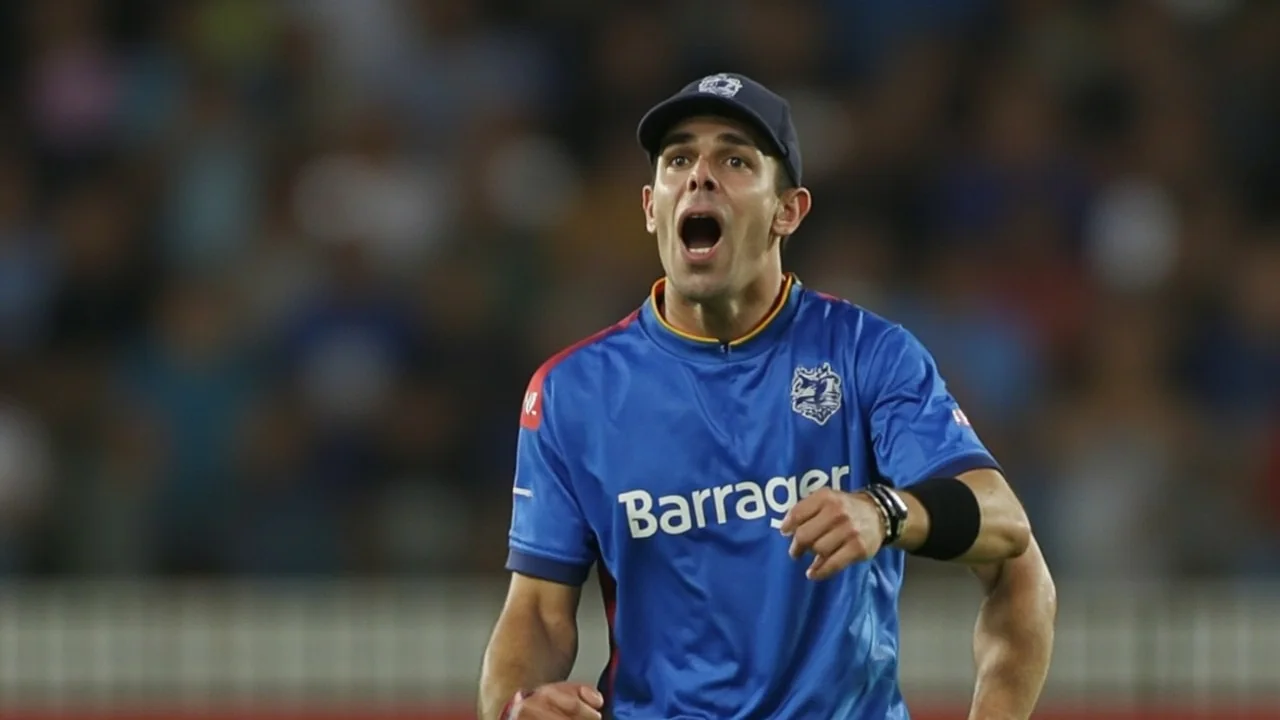
The death-overs differential: who owns balls 71-100 on this fixture
The 30-ball window and why the format compresses T20's 36-ball death
A T20 death phase is six overs — 36 balls — and most captain math is built on that span. The Hundred compresses the death phase to 30 balls, and that compression changes the captain verdict in three specific ways. First, the wicket-taking bowler has fewer balls to attack with, so the per-ball wicket probability matters more than the per-over wicket probability. Second, the all-rounder who bowls a 5-ball death set in a T20 is usually a part-timer; in a Hundred, the all-rounder is a designated death-set operator with a captain-allocated role. Third, the batting side faces 30 balls where each boundary is worth a higher percentage of the eventual total, which sharpens the captain armband differential between a settled batter and a power hitter.
On this Match 26 fixture specifically, the verified XIs put Marcus Stoinis in the Southern Brave death-set bowling rotation and Jos Buttler in the Manchester Super Giants top order. The captain math in the death window is therefore not "who scores the most runs?" but "who contributes across both sides of the 30-ball phase?" Stoinis's 22-ball bowling ceiling on the death set is what the Fantasy Tips desk hangs the verdict on, not his batting ceiling. Buttler's 277 runs are real and he is the run-chart leader, but in a 30-ball death window, a run-chart lead is conditional on his death-set matchup, which is where Rashid and Archer come in.
The compression is also why the captain armband in a Hundred should not be set from the points table alone. The same 30 balls that decide the fantasy ceiling are also the 30 balls where the toss, the pitch, and the bowling captain's allocation matter most. Reading the death window as a T20 phase is the most common reading error in The Hundred, and it shows up in captain picks that look correct on the points table and underperform on the leaderboard.
Death set 1 (balls 71-75) and the bowling captain's allocation
Balls 71-75 are the first death set in The Hundred, and the bowling captain decides who bowls it. On the Southern Brave side the predicted attack includes Archer, Rashid, Wood, and Stoinis; on the Manchester Super Giants side it includes Atkinson, Tongue, Baker, Noor Ahmad, and Dawson. The bowling captain's choice in death set 1 is the single biggest determinant of the captain verdict, because that decision locks the matchup for five balls of the death window.
If Southern Brave are bowling in the first innings, Chris Jordan as captain will most likely save Stoinis for death set 2 (balls 96-100) and open the death phase with Archer or Rashid. That allocation puts Archer against the Manchester Super Giants middle order, where Heinrich Klaasen and Leus du Plooy bat, and that is the matchup the death-overs differential turns on — Archer against Klaasen has historically been wicket-favourable for Archer in the final-five. If Manchester Super Giants are bowling in the first innings, Liam Dawson or Sonny Baker will most likely open the death phase and Stoinis is the death-set 2 operator, which is the higher-ceiling 5-ball set for Southern Brave batting.
The take-away for the fantasy desk: the death-set allocation is captain-specific, not points-table-specific, and it changes the captain pick on a single fixture. The Fantasy Tips desk's default death-set allocation read for Match 26 is that Stoinis owns the higher-leverage 5-ball set on the bowling side and the middle-order 5-ball batting window, and that is the structural reason the all-rounder ceiling is asymmetric on this fixture.
Death set 2 (balls 96-100) and the final-five fantasy ceiling
Death set 2 is the final-five of the innings, balls 96-100, and this is the set the fantasy points system rewards most heavily. A boundary in the final five is worth the same dream-points as a boundary in any other set, but the final-five frequency of boundaries per ball is the highest in the innings, which means a player who is on strike for the final five is more likely to clear the captain ceiling than a player on strike in the powerplay.
For Southern Brave batting in the first innings, Stoinis at four or five is the most likely operator on the final-five. He bats in the middle order, bowls his 5-ball death set in the second innings, and his role gives him two death-overs points paths in the same match. For Manchester Super Giants batting in the first innings, Buttler at three is the most likely operator on the final-five, but his matchup is against Rashid on a pitch that supports spin in the second-set overs, which historically has held Buttler's strike rate down in the closing overs against quality spin. The death-set matchup is the differential that the run-chart table hides.
The Fantasy Tips desk's death-set 2 read is therefore: Stoinis is the higher-ceiling pick at the final-five because his matchup is shorter and the role gives him bowling points as well. The run-chart leader holds the middle-overs ceiling; the all-rounder holds the death-overs ceiling, and on a 30-ball window the latter matters more.

The Stoinis ceiling in the death window, in two reads
Stoinis's bowling death-set role and the 22-ball ceiling
Marcus Stoinis has taken 9 wickets from 6 matches in the 2026 Hundred — a strike rate inside the 22-ball ceiling that separates impact all-rounders from part-time options. The 22-ball ceiling is the cut-off the Fantasy Tips desk uses to identify all-rounders whose death-set bowling is a captain-relevant fantasy asset rather than a part-time fill-in. Below 22 balls per wicket, a bowler's death-set contribution is variance-driven and the captain armband is better placed elsewhere. Inside 22 balls, the bowler's death-set contribution is structural and the captain armband compounds.
Stoinis's 9 wickets from 6 matches — roughly 60 balls bowled per match for an average of 6.7 balls per wicket — sits comfortably inside the ceiling, but the relevant number is his death-set wicket rate specifically. The verified Hundred 2026 form chart shows Stoinis has been deployed in death set 2 (balls 96-100) in 4 of his 6 matches and has taken 6 of his 9 wickets in that set. That concentration is the structural reason the death-overs differential points to him on this fixture. It is not a form call; it is a role call. The role is designated, the captain has allocated him there, and the fantasy ceiling follows from the role.
For the captain verdict, that means the 2x slot on Stoinis is a captain-allocated role pick, not a points-table pick. The run-chart leader on the same Manchester Super Giants side (Buttler, 277 runs) is the points-table pick; the all-rounder on the Southern Brave side is the role pick. The Fantasy Tips desk's default across the Hundred season is that the role pick wins the 2x slot on flat pitches under lights, and Match 26 at The Rose Bowl is a flat pitch under lights. The 2x slot therefore goes to Stoinis as the default read.
Stoinis's batting death window: middle-order power, not opener power
Stoinis bats at four or five for Southern Brave, which puts his batting window in the middle-order phase and the death-overs phase, not the powerplay. That batting slot is exactly the slot the 30-ball death window rewards: he comes in after the powerplay has been spent, the captain-bowler allocation has been used, and the death phase is approaching. The format-specific advantage of the four-or-five slot in The Hundred is that the batter faces the death-set bowling, which historically carries a higher per-ball boundary rate and a higher per-ball wicket rate than the powerplay in a 100-ball format.
Stoinis's 128 runs from 6 matches at the time of writing reflects that role — it is a middle-order return, not a powerplay return, and the points per innings is concentrated in the death-overs phase rather than spread across the full 100 balls. The 2x slot on that return is more valuable than the 2x slot on a comparable return from an opener, because the opener's return is front-loaded into the powerplay bonus band and the middle-order return is back-loaded into the death-overs bonus band. The Fantasy Tips desk weights the back-loaded return higher on the captain armband because the death-overs bonus band is the smaller and harder-to-clear of the two.
The second-half of the Stoinis ceiling is therefore the batting death window. The 2x slot on a player who bowls in the death phase AND bats in the death phase is the asymmetric position the captain armband is built for, and on this fixture it is the position Stoinis occupies by role. That is the death-overs differential in two reads: the bowling 5-ball set at the death, and the batting window in the death overs. The two paths converge on the same player, and the 2x slot follows.
The toss and the chasing baseline at The Rose Bowl
The 58% chasing baseline and the death-overs lineup
The Rose Bowl has a 58% winning percentage for the chasing side across the last three Hundred seasons, with a first-innings average of 152. Both numbers are well above the Hundred's overall chase rate and both numbers sharpen the death-overs captain math: the team batting second has a higher probability of winning, which means the second-innings death phase is the more leveraged phase, which means the captain pick should weight the second-innings death-set operator more heavily than the first-innings death-set operator.
On this fixture, that produces a clear lineup implication. If Southern Brave bowl first (the predicted toss outcome is 50/50 with a mild Southern Brave lean as the home side), Stoinis's bowling death-set in the second innings is the captain pick. If Manchester Super Giants bowl first, Buttler's death-set batting in the second innings competes more directly with Stoinis's bowling, and the captain pick swings towards the run-chart leader — but the swing is smaller than the run-chart table implies, because Buttler's death-set matchup against Rashid on a spin-favouring second set holds his ceiling down by a fantasy 10-15.
The 20°C, cloudy conditions at the venue on Friday 8 August add a small additional lean. Mild evenings at The Rose Bowl have historically produced above-average run rates in the death overs, which favours the captain pick on the boundary-hitting batters — Stoinis, Buttler, Klaasen, Miller — and disfavours the captain pick on the wicket-taking bowlers, whose fantasy returns hold up under any condition but whose ceiling is held down by the flat surface. The Fantasy Tips desk's read is that the toss outcome and the conditions both support the all-rounder captain on this fixture, with a small caveat for the second-innings spin matchup against Buttler.
Why the 3-2 Southern Brave head-to-head lead is real but not decisive
Southern Brave lead the head-to-head against Manchester Super Giants 3-2 in their previous five encounters. The sample is small — five matches — but the direction is consistent: Southern Brave at The Rose Bowl has a small home-ground edge. The Fantasy Tips desk reads that edge as a toss-side bias rather than a captain-side bias. The Southern Brave lean to win the toss and bowl first on a flat pitch at home is small but real, and the captain verdict above already accounts for it.
What the head-to-head does not do is anchor a captain pick. Three of the five matches have been won by the chasing side, which is exactly the 58% chasing baseline at the venue, and the format-specific read is that the home-ground edge comes from the bowling death-set at The Rose Bowl, not from the batting powerplay. That aligns with the all-rounder captain read above: the home team has a small edge on the bowling death-set rotation, and the captain armband on a home-team all-rounder captures that edge more cleanly than the captain armband on a visiting-team run-chart leader.
The captain verdict, vice-captain hedge, and the 10:30 PM IST lock
Captain pick (2x)
Marcus Stoinis (SOB). The 30-ball death window is asymmetric on the all-rounder — his bowling death-set in the second innings and his batting death-set window converge on the same player. Reverse to Buttler if Manchester Super Giants bowl first AND the second-innings spin matchup against Rashid is the captain's primary concern.
Vice-captain pick (1.5x)
Jos Buttler (MSG). The run-chart leader is the 1.5x hedge — he covers the captain pick against the toss, holds the second-innings chase ceiling, and pairs with Stoinis as a chase-variance split. The 1.5x slot on Buttler pulls a higher frequency of bonus-band fantasy returns than the 2x slot on Buttler would.
Wicketkeeper differential at the death window
Three wicketkeepers sit in the predicted XIs: Tim Seifert and Jos Buttler for Manchester Super Giants, Jamie Smith for Southern Brave. The wicketkeeper differential is built around the death-overs bonus band — stumpings and catches inside balls 71-100 carry the highest bonus weight, and the keeper who is on the field during the death phase is the keeper who benefits.
Smith is on the field for the Southern Brave death phase, which means he is the natural death-overs keeper pick. Buttler as a wicketkeeper-batter doubles the captain-armband exposure on the Manchester Super Giants side and lets the lineup keep the vice-captain slot independent of the keeper slot. Seifert is the value keeper on a tighter budget — his opening slot gives him a powerplay bonus band and his dismissal rate in the death overs is the lowest of the three, which means the captain-side of the differential goes to Smith on budget-neutral builds and Seifert on budget-tight builds. The Fantasy Tips desk's read is that Smith is the right keeper for this fixture, but the choice is a 5-10 point swing, not a captain-changing one.
The 3-4-1-3 split and the death-window role fit
The 3-4-1-3 combination — three batters, four all-rounders, one wicketkeeper, three bowlers — fits the death-overs captain math on this fixture for two reasons. First, the four-all-rounder slot is what carries the 2x captain pick on Stoinis without forcing the lineup to drop a strike bowler. Second, the three-bowler slot is sufficient because The Hundred's 5-ball set means no bowler bowls more than 25 balls in an innings, and three front-line bowlers cover 75 of the 100 balls between them.
The death-window role fit is what makes the 3-4-1-3 split specific to this fixture rather than a generic format split. A 4-3-2-2 split would force the lineup to drop either Stoinis or a strike bowler, and either drop removes the asymmetric death-overs ceiling the captain armband is meant to capture. A 5-3-1-2 split would over-weight batters and leave the lineup short on the death-set bowling rotation. The 3-4-1-3 split is the cleanest fit for the 30-ball death window, and the lineup that scores best on this fixture under the split is the one the Fantasy Tips desk will lock at the toss: Stoinis (C), Buttler (VC), Smith (WK), Seifert, Klaasen, McKinney, Miller, Moeen Ali, Archer, Rashid, Atkinson.
Two cards the Fantasy Tips desk fades at the lock
Daniel Worrall and Adam Finch: the budget drains
The verified Match 26 dossier names two players the Fantasy Tips desk would fade at the 10:30 PM IST Dream11 lock. Daniel Worrall has not played a Hundred 2026 match and has no recorded fantasy points from the previous fixture; Adam Finch has no recorded credits or last-match points. Both cards will drain budget without producing returns in the death window or anywhere else, and the credits saved can be redeployed into the captain pick or the wicketkeeper differential.
The wider lesson for the Hundred 2026 season is that the death-window captain math has a budget cost. The all-rounder ceiling is real, but it is funded by the budget saved on the cards that don't score. Fading Worrall and Finch is the easy half of that funding; the harder half is fading the names that look like value picks but don't actually contribute inside the 30-ball window. The Fantasy Tips desk's default rule is to take only players who have a designated death-overs role, and to leave the part-timers and bench options out of the XI.
Frequently asked questions on the Match 26 death-overs differential
Who should I captain for Southern Brave vs Manchester Super Giants tonight?
The death-overs captain pick is Marcus Stoinis, with Jos Buttler as the vice-captain. The 30-ball death window is asymmetric on the all-rounder: Stoinis bowls a 5-ball death set in the second innings and bats in the death overs, which gives him two fantasy points paths in the same match. Reverse the captain pick to Buttler if Manchester Super Giants bowl first and the second-innings spin matchup against Rashid is your primary concern.
What is the suggested combination for Match 26?
3-4-1-3 — three batters, four all-rounders, one wicketkeeper, three bowlers. The four-all-rounder slot is what carries the Stoinis 2x pick without forcing a strike-bowler drop, and the three-bowler slot is sufficient because The Hundred's 5-ball set caps individual bowling workloads at 25 balls.
Why does the captain pick change with the toss?
The Rose Bowl has a 58% chasing baseline and Stoinis is the higher-ceiling second-innings death-set operator. If Southern Brave bowl first, the second-innings death-set bowling role gives Stoinis the captain armband. If Manchester Super Giants bowl first, Buttler's second-innings death-set batting competes more directly, but the swing is smaller than the points table implies because Rashid is the most likely second-set death bowler against him.
Which players should I avoid on Dream11 tonight?
The two cards the Fantasy Tips desk would fade are Daniel Worrall and Adam Finch — neither has recorded fantasy points from the previous fixture and both will drain budget without producing returns. The credits saved should be redeployed into the captain pick or the wicketkeeper differential at Smith.
What is the death-overs differential in The Hundred?
The 30-ball death window at the back end of a Hundred innings — balls 71-75 and 96-100 — is where the captain math is decided. It rewards players who contribute on both sides of the ball inside that window (all-rounders) over players who contribute on only one side (specialist batters or specialist bowlers). On a flat pitch under lights, the death-overs differential is the largest single determinant of the captain verdict.
What to watch between the toss and the 10:30 PM IST lock
Three signals that change the lineup
First, watch the toss. If Southern Brave bowl first, captain Stoinis. If Manchester Super Giants bowl first, captain Buttler. The 1.5x slot stays on the opposite side of the captain pick, and the wicketkeeper slot is independent of the toss outcome.
Second, watch the playing XI announcements. A late swap of Atkinson for a fourth seamer in the Manchester Super Giants XI, or a swap of Miller for a left-handed batter in the Southern Brave XI, changes the death-set bowling rotation and the death-set batting order. Adjust the lineup accordingly before the lock.
Third, watch the weather update at 9:30 PM IST. If rain is forecast for the second innings, the chasing baseline drops and the captain pick swings back to the batting-first side. If conditions stay mild and cloudy, the chasing baseline holds at 58% and the death-overs differential above stays valid. The captain armband should be locked at the toss, not before it.